Sunday, 29 June 2014

The Giant Who Threw Tantrums! (Pretend to Learn: Helping Children Learn Through Drama)

Drama Convention Chosen: Freeze Frame
Brief Description of Drama Convention:

Freeze Frame is a devise image which participants form using their own bodies to crystallize a moment, idea or theme.The participants act out a freeze pose that is related to plot or theme that they wish to show using only their bodies and facial expressions. No sound or movement is used, similar to that of a photograph.
  • In the workshop plan, the participants will have to work in groups to come up with a way to trap the giant alive. They need to plan how they are going to execute it by discussing with one another. To share their strategy plan, they need to create a 'photo' which is a freeze frame that shows how they would capture the giant. 


1. The purpose of the drama convention in the chosen workshop.

  • The purpose of the Freeze Frame is to help participants share their strategic plan to trap the giant alive. In the story, there seems to be a problem about a tantrum-throwing giant in Thistle Mountain. The giant may bring forth danger to the people living in the area. The participants take on the role as people living in Thistle Mountain, they need to solve this problem without killing the giant. The purpose of the convention is to explore a possible strategy plan to trap the giant alive and help solve his problems so that the tantrum-throwing giant will not be any danger to the people living in the area. The Freeze Frame convention emphasizes on the what happens next element. The Freeze Frame convention prepares the participants for the upcoming interview with Mr Brown (a giantologist) whereby they have to persuade him that their strategic plan will work.
  • By using a Freeze Frame the participants get to see a variety of different interpretation of ideas to trap the giant alive because people have a different perception of ideas of what the giant is and how it would react and behave. In order for them to think of a good strategy plan, they need to put themselves into the giant's shoes. Freeze Frame encourages the participants to use their whole body including their facial expression to convey emotions, messages and ideas to the rest of the participants. The participants will have to be quick on their feet as they have limited time given to plan their strategy. 


2.How does the drama convention help to achieve the objective(s) of the workshop?

  • The objective of the workshop is to get participants to be involved in helping to solve the problem of the tantrum-throwing giant while being taking on the role as people living in the area. By coming up with strategic plans to trap the tantrum-throwing giant, the participants (people living in Thistle Mountain) would then be able to capture the giant. After executing the plan to capture the giant, the participants would be able to find out about the giant problem by hot-seating the giant. Once the children find the cause of his tantrum, they would be able to help find possible solutions to the giant's problem. By helping the giant resolve his issues, the participants are also helping to prevent Thistle Mountain from any upcoming giant attacks. 


3.How does the drama convention prepare participants for the next activity?

  • The freeze frame evokes the participant's imagination of what the giant would be like. To do so, they need to recall any stories or any information they have heard or seen before and identify the characteristic of the giant they know of, to create their version of the tantrum-throwing giant. The participant has to explore thoroughly on the giant's character and it's physical appearance in order for the trap to work. By exploring the giant's character, the participant would have to create some form of ideas or concept of the giant they have in mind. This will help them to persuade Mr Brown, a giantologist that their strategic plan would work. Participants would be able to provide a detailed explanation with supporting reasons on how their plan will work because they created the trap with the giant in mind. The persuasion would only work if the participants know what they are expecting and have a good explanation to support their strategy plan!


Here is an example of what this Drama plan will look like!


Saturday, 21 June 2014

Red Riding Hood


We started the lesson with drama activity.

Drama Convention: Freeze Frame

Instructions ... ...
1)Everyone is to stand at one side on the classroom.
2)Base on a story being told to you, create one big freeze frame.
3)But only one person can go in the freeze frame at any one time to build a picture.
(Which means you go and decide where in this landscape you want to be what. The next person keep watching and goes in to contribute till everyone is in that big freeze frame.)
4)There must be no communication throughout the activity.
5)When you get into the frame, just freeze.
6)Make sure that even your facial expression is telling of a character's thoughts.
7)As the facilitator walks in the space, actors being identified will have to come to life for about 15 seconds before returning to their original positions. 

REFLECTION
I enjoy this activity because it does not limit my imagination, I could be anything I want to be. For example, I want to be  rock which is an inanimate object. But I must have overall understand that the main purpose is to create a picture of the story Red Riding Hood. Through the freeze frames we were able to identify some elements in the story such as the  characters, objects and living creatures.


Drama Convention: Collective Storytelling

Instructions ... ...
1)Form a circle as a team.
2)Add on to the story as we go along. Base on what you know about the story.
3)Using the earlier Freeze Frame Convention, build the story with what you saw.
4) Try to more specific and realistic when you craft the story. 
5) It might help if you think about what you want to give grandma and provide a reason for doing so.

REFLECTION
I have learn a method to use if the collective storytelling is not working. I can get the participants to work on a particular issue for example the type of food Red Riding Hood should bring for Grandma. It gives an idea on what food would be appropriate for grandma. This activity can be use to create a prop that might help improve the quality of the story. Participant might find it to create a story with a visual stimulus around to remind them. Collective story telling is similar to collective writing as both is use so that the participant can have better understand of the story. Collective drawing can be used for participant who don't enjoy writing words or drawing them out thus participants get to use props and real things to form the story. We did a ritual whereby everyone got together as a group and started delivering their lines. This ritual exercise must be done with the right amount of energy which means that the first person has to high and should not mumble the words. I've notice that the story is told from a third person narrative.


If we were to retell the story, whose perspective might we adopt ? (The grandma, the wolf , the woodcutter or red riding hood.)


Drama activity: Story Telling in Role or Collective story telling

Instructions ... ...
1)Everyone is divided into 4 groups each group will take on the role as either a grandma, wolf, woodcutter or red riding hood to tell their perspective of how the story went.
2)You have a total number of lines that will be twice the number of people in your group.
3)The first rule is that the distributions of lines must be equal.
4)The second rule is that everyone is going to be one character in that story. 
(Which means the team has to find poses, freeze moments one at the same time to signify that character.)
5)You are entitled to do 4 pose.
6)At any point in time the lines are bring spoken, those who are not speaking will have to assume that pose.
7) Standing in your order (be a a straight line or semi-circle) , all of you will go into a neutral position. Legs are slightly apart, hands by your side, shoulders relax and your eye-line looking forward.
8)When two drum beats are heard, you will move into your first pose.
9)When the next two drum beats is being heard, you would move to the next pose.
10)We will start off with a collective rehearsal whereby every group will will move together.

Duration: 10 minutes.

REFLECTION.
I was given the chance to practice my summary skill base on my favourite childhood fairytale Red Riding Hood. Initially, I found it difficult to narrow down the plot because I find that there was a reason for included such plot to the story and taking it out would make the story less exciting. However I was reminded that the purpose of the summary is to identify key moments in the story and not tell all of it. I have to pay attention to simple details such as where to look, when to say the line, how to return to neutral position? Even the position of the foot must be identical to each other. 

Drama Convention: Role on the Wall

Instructions ... ...
1) Decide on one character to focus on. (Be it the wolf, grandma, woodcutter or red riding hood.)
2)After each group has presented their version of the story, share your thoughts and opinion of the character that you deicide to focus on. Provide valid reason to support your statement. 
E.g. What were some of the character's personality traits ? What was he like ?

REFLECTION
I think think of focusing on character throughout the whole story is to enable the class to have a more in-depth understanding. Instead of having a general idea of all the characters. Also, when we focus on one character, we get to have different view point as each group shares their perspective of the story.
Story telling in role allows me to look at the perspective of another character so that we can to know the character better. We can understand the situation better. I was able to identify what the woodcutter was feeling and why he choose to save red riding hood in the end. Using a logical explanation we were able to give possible reasons for his actions.


Drama Convention: Conscious alley

Instructions ... ...
1) Stand in two lines, facing towards each other.
2)Think about what you would say to the wolf for whatever has happened in that story.
(We know that he wore a bullied proof vest to protect himself, he ate up grandma and the woodcutter split him open.)
3)What are your thoughts towards the wolf ?
4)Where should he be?
5)How do you feel towards what the wolf has done to the grandmother and to red riding hood?
6)When the facilitator step into the alley, she would be the wolf. Your task is to express your thoughts towards the wolf.

REFLECTION.
I find conscious alley quite similar to thought tracking in term of it's physical position. The difference is that previously,the thoughts were being voice out by the participants taking on the role as the goat crossing the bridge. However this time, participants to make a stand on the character.I got to see a different sides of my classmates, people who are forgiving, sympathetic and there are people who will curse you.This drama convention triggers the consciousness of the character to reflect on his past actions. Whereas thought tracking doesn't have to happen in an alley. I think that consciousness alley can be done only if role on the wall was used before that. Role of the wall proves a visual analysis for the participants allow them to come to a conclusion about the character.It taps on my own understanding of the topic.


----------------------------------------------- THE END ---------------------------------------------------


Tuesday, 17 June 2014

Drama Contract or the Devils Contract ? (Drama Convention- Week 1)


Drama in education is a social learning activity. “In order to increase
children’s confidence, allay their fears and dissipate their inhibitions
they must be allowed to make the drama in a safe environment, where
what they do is valued and validated by other children and the
teacher”. (Drama Teacher Guidelines p. 9)

The purpose why Drama contract exists is summarised in the following points ... ...
- It allows negotiation to take place in groups so that they will be to work together productively.
- It establishes the terms of the partnership between facilitator and participants. 
- It carries the expectation that everyone will contribute and respond.
- It helps to acknowledge the particular demands that Drama makes. Such as working orally, physically, emotionally and cooperatively.
- It demystifies drama as an art form and guarantees that the facilitator will not as more of the participants than they are willing or prepared to do themselves.
- It provides a reference point for dealing with the problem as they may arise.
- It guarantees a space in which people feel safe expressing how they feel about materials, issues, or group dynamics. 
- It initiates a dialogue that allows all group members to negotiate and reflect upon the work.


A Drama contract is an agreement made by 2 or more people. These people would come together to brainstorm ideas on which they would like the team to abide. The target audience would be everyone and not an individual. Each contract is unique as there are different types of people who differ in their thinking. Not all Drama contract must be lengthy! 


References

Friday, 6 June 2014

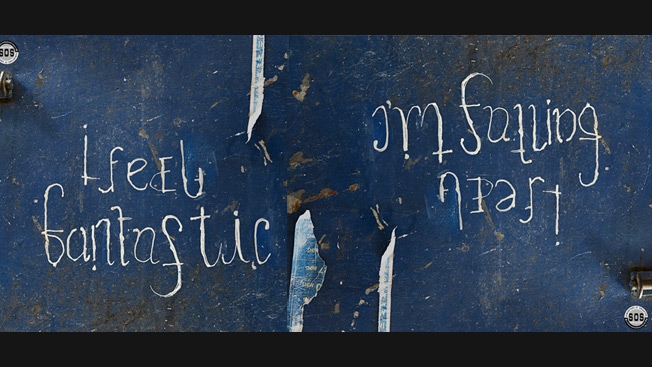
Teens with suicidal tendency... ...


Does this sound familiar?

“where no one can understand me, when I feel like there's no hope no love,and it's all taken away from me. I feel like dying where my heart tightens up and beat so slow and the pain inside me numbs my body outside cause the world once I live in was not there for me any more than punish myself with a death penalty” - no one cares


1) An explanation of why you think this community (Teen with suicidal tendency) is hidden

I think the teen suicide tendency community is hidden due to various reasons. I think that one of the main reason is broken communication between parent and their child. From the article about Teen suicide,  teens tend to not confide in their parents because they will not believe what the child is saying.  Some adults feel that kids who say they are going to hurt or kill themselves are "just doing it for attention."Parents do not realise that if teens are ignored when seeking attention, it may increase the chance of them harming themselves or potentially doing what they say. Parents also take for granted that their teens will not commit suicide. It is important for parents to keep the lines of communication open and express concern, support, and love for their children. If their children confides in them, they should show that they take those concerns seriously.It's important not to minimise or discount what their children are going through, as this can increase his or her sense of hopelessness.

In National Alliance on Mental illness proved that many of us are reluctant to ask others if they have been thinking about suicide or hurting themselves because we fear that by asking, they will plant the idea of suicide in their mind. This is a common false misconception! By bringing up the question of suicide and discussing it in a neutral stance is one of the most effective approaches. The openness to the topic gives the impression that we are taking the individual seriously and responding to the severity of his or her distress.

In my own opinion, a teen with a suicidal tendency is hidden because of the negative perception attached to people who seek help.Back in my secondary school, if someone goes in the counselling room, he or she would be deemed by her friends as someone who is weak. The people have the mindset that weak people need others to solve their problem for them. They would natural distant themselves or avoid having a contact with her in fear of an adult intrusion. Thus many teens with suicidal tendency would rather pretend to be normal than to risk losing their friends.


2) A description of the concerns this community (teens with suicidal tendency) has or the issues they are facing.

From the suicide prevention and intervention, web page states that completed suicides are only part of the picture. Other forms of suicidal ideas and behaviours are much more common. It is estimated that for every youth who dies by suicide, 100–200 youth attempt it.


Some teens are suffering through a major disappointment such as rejection, loss of a boyfriend or girlfriend and failure at school or in sports which may trigger suicidal tendencies in teens, who have difficulty coping with these kinds of situations. Although these circumstances alone may not be responsible for suicide, they are factors that contribute to teens taking extreme measures, the  National Alliance on Mental Illness, or NAMI, points out.

Worrying about their own self-worth is a common issue in teens that may lead to suicidal tendency according to American Academy of Child and Adolescent Psychiatry.  Other similar issues include going through a parental divorce, moving in with a new family, living in a new location, going to a different school, being a victim of physical or sexual abuse.These unsettling issues intensify uncertain feelings such as distress, anxiety or agitation. Which affect the ability to judge between right action from wrong.  Teens will seek suicide as a solution to escape all these issues they are facing.

Canoe.Ca found that many teen suicides are committed by people who are depressed. Depression is mental health disorder. Depression causes chemical imbalances in the brain, which can lead to despondency, lethargy, or general apathy towards life. This mental disorder can cause feelings of hopelessness and worthlessness, according to Kids Health.Almost half of 14- and 15-year-old have reported feeling some symptoms of depression that affect the ability to coping with the extensive stresses. Depression can be particularly harmful to teens who experience violence at home or at school and feel isolated from their peers or lack a social network of friends. Approximately 75 percent of people who commit suicide suffer from depression, according to the Harris County Psychiatric Centre at the University of Texas. 

From a Livestrong article, it states that drug or alcohol abuse can lead to impulsive behaviour which can lead to a reckless decision or action that will cost their life. Teen who is haunted by other problems such as a mental disorder or family issues is at risk of such undesirable consequences. Similar to adults who turn to alcohol or drugs teen may believe that substance abuse will bring them relief from their surrounding difficulties, which is not the case. Kids health notes that substances abuse and mental disorders play prominent roles in the majority of suicides. 

On the edge Episode 9 mentioned that  Even if the teen wants to seek professional help, they are worried about the stigma of such action. The impression of Institute of Mental Health is categorised as a place for the lunatic. I think that why National Youth Health created CHAT hub. It is a friendly place that offers free assessment services for people with concerns. There are also several hotline available such as Samaritans of Singapore (SOS) which hopes to help people with issues, suicidal or people affected by the suicide by providing 24 hour confidential emotional support and Singapore Association For Mental Health which is a voluntary welfare organisations (non-governmental and non-media organisations) aims to promote social and mental health. Teens are more likely to call because they are assured that their identity is hidden to minimise the fear of being judged. Most people prefer to seek help when their identity is kept anonymous as shown by the status of a form of online help.

Statistics: http://www.samaritans.org.sg/SOS-Statistics.pdf

From my personal experience, I think that teens with suicidal tendency find it hard to seek help because many of her friends will judge her instead of supporting her through the situation; some may even leave her eventually. There was a period of time in my life that I wanted to commit suicide because I could not handle the stress given by myself to score better in my exams. My grades have never gone beyond a B even when I’ve put in so much effort. I felt like a failure and just could not bear to receive any more blows. Samantha, my best friend knew about my situation takes the issue lightly. She tried to give me encouragement by saying “Next time it will be an A”! However, this false hope made me even more depressed. After awhile she gave up on me after comforting me countless of times. She being to avoiding and ignoring me soon after.I felt even more depressed because I felt like I was a burden to her that is why she left me. I was a troublesome friend to have, that is why she left me. This was the last straw for me. The lack of family support could make the teen feel isolated, unloved and unwanted. These feeling will push her near the edge of suicide because I felt that there is no reason for me to be alive anymore. The environment around the Teen with suicidal tendency plays a crucial role in influencing her decision. Friends and family members should know the symptoms of suicide to help identify and reach out to the victim in need in hope of helping a friend to feel a little less alone. Sometimes all they need is just a listening ear.


3) An explanation of how practitioners and/ or organisations have worked with this group (if applicable). The work does not have to be theatre based.  (Religion? What has been done?)

Medicine net explains that treatment of suicidal thinking or a suicide attempt involves adapting immediate treatment to the sufferer's individual needs. Those with a strong social support system, who have a history of being hopeful, and have a desire to resolve conflicts may need only a brief crisis-oriented intervention. However, those with more severe symptoms or less social support may need hospitalisation and long-term outpatient mental-health services.

Theatre in Education
NeNeMas is a Drama box community and education Branch. The present interactive theatre while using special pedagogy for students, teachers and the private sector using workshops. They hope that participants will like this type of teaching methods; participants will also understand themselves better, treasure others and care for the society.
The play “Girl in the white sand box” is a Theatre in education performance combines both entertainment and education. Through performance and interactive activity, students look into symptoms of teenage depression. Through the activities, the student can use more proactive approach methods to counter the challenges/ burden as well as to able to help their friends in similar situations. Students will go through interactive activity before and after the performance using mandarin to evoke self-reflection and develop the ability to differentiate right from wrong.
Activity focuses on the causes of the pressure of their life. To draw or list down all possible causes, list down things that are important to them. The purpose of doing so is to remind them what is important to them when the times are not smooth. The last activity was to reflect on their life. The participants have to list down the problem, person involves and why it happened for the situation column. For the solution column the participants have to list down her point of view, the view of the people involved and possible
In School

In my secondary school (Springfield Secondary School), my school counsellor planned a program to educate the student about teen suicide what is represents and its causes. The lesson plan includes the purpose of the talk. Why are the counsellors talking about suicide? He will list the common reason for teens to commit suicide that includes examples. Reasons such as being picked on at school or even being unhappy at home because of a divorce or family conflict that leads to the teen feeling distress. He would give tips on how to cope with the stress. He would advise students to talk to someone who would listen making them feel less alone. He uses a role play script to further enhance the experience. Using the script, students would be able to better relate to the situation at hand. The perks of using a script are that it allows students to reflect on what the actor is feeling and why. Student gets a better understand of whether the character is suicidal or not with supporting evidence for their perceptions. This would gear towards a collective group discussion on the topic of teen suicide. The response from the students would help indicate any possible suicidal victims.
With the basic understanding, the counsellor can then move on to explain how suicidal feeling develops. To make the character more relate-able, the student would be asked to list down possible problems and the possible emotion displayed. This provides visual perceptions of the suffering the character might have felt and how the problems manifest from one problem to another which ultimately leads to suicide. This helps to show students that their problems can affect their surroundings. The students have to put themselves in the shoe of the character to be able to empathise with her plight. The character is shown to be trapped in the situation unable to see a way out, lost the reason to live.

Samaritans of Singapore (SOS) is a  non-profit and non-religious organisation which aims to provide 24-hour confidential emotional support to people in crisis, thinking of suicide or affected by suicide.
The organisation gives suicidal the impression that their problem matters to them and that they care enough to listen. It states that they are here 24/7, to provide emotional support and to prevent suicide. If suicidal feel all alone and no one seems to understand or care about them, they can call or email SOS.
Teens with suicidal tendency can call SOS 24 hour hotline that is available round-the-clock, everyday, all year. The calls are taken by trained volunteers (Samaritans) who come from diverse backgrounds, all of whom share a common capacity to care and listen to anyone who is going through a difficult time. They do not have to worry about being exposed as all information shared by callers is treated as strictly confidential. Callers can choose to remain anonymous thus reducing the fear of being judged.
They can also choose to write an email instead of talking on the hotline.If they were to email Pat, they are sure to receive a reply within 48 hours (excluding weekends and public holidays).
If teens with suicidal tendency are not afraid to meet up and talk about their problems, they might want to seek Professional Counselling.


I end off with a quote ... ...

When you get into a tight place and everything goes against you, till it seems as though you could not hang on a minute longer, never give up then, for that is just the place and time that the tide will turn.  - Harriet Beecher Stowe


References
-http://www.cdc.gov/nchs/data/nvsr/nvsr58/nvsr58_19.pdfhttp://kidshealth.org/parent/emotions/behavior/suicide.html#%20
-http://www.nami.org/Content/ContentGroups/Helpline1/Teenage_Suicide.htm
-http://www.nami.org/Template.cfm?Section=By_Illness&Template=/ContentManagement/ContentDisplay.cfm&ContentID=23041
-http://www.nasponline.org/resources/principals/Suicide%20Intervention%20in%20Secondary%20Schoools%20NASSP%20Oct%202006.pdf
-http://psychiatryonline.org/content.aspx?bookid=28&sectionid=1673332
-http://chealth.canoe.ca/channel_condition_info_details.asp?disease_id=135&channel_id=40&relation_id=55627
-http://www.livestrong.com/article/130491-causes-teenage-suicide/
-http://www.youtube.com/watch?v=ZZisNW7OpcQ%20
-http://www.samaritans.org.sg/SOS-Statistics.pdf
-http://www.onhealth.com/suicide/article.htm#suicide_facts
-http://www.samaritans.org.sg/index.htm